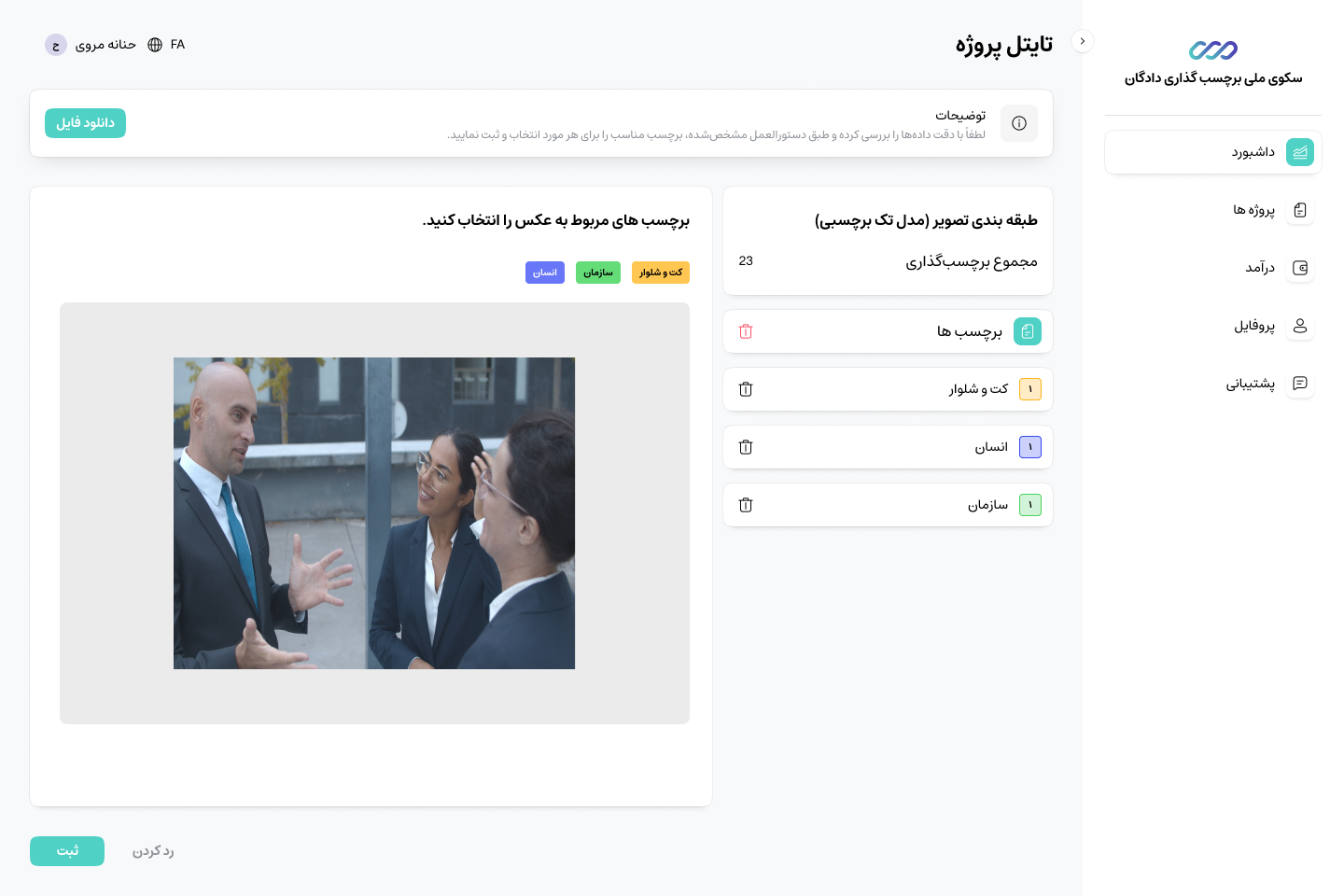
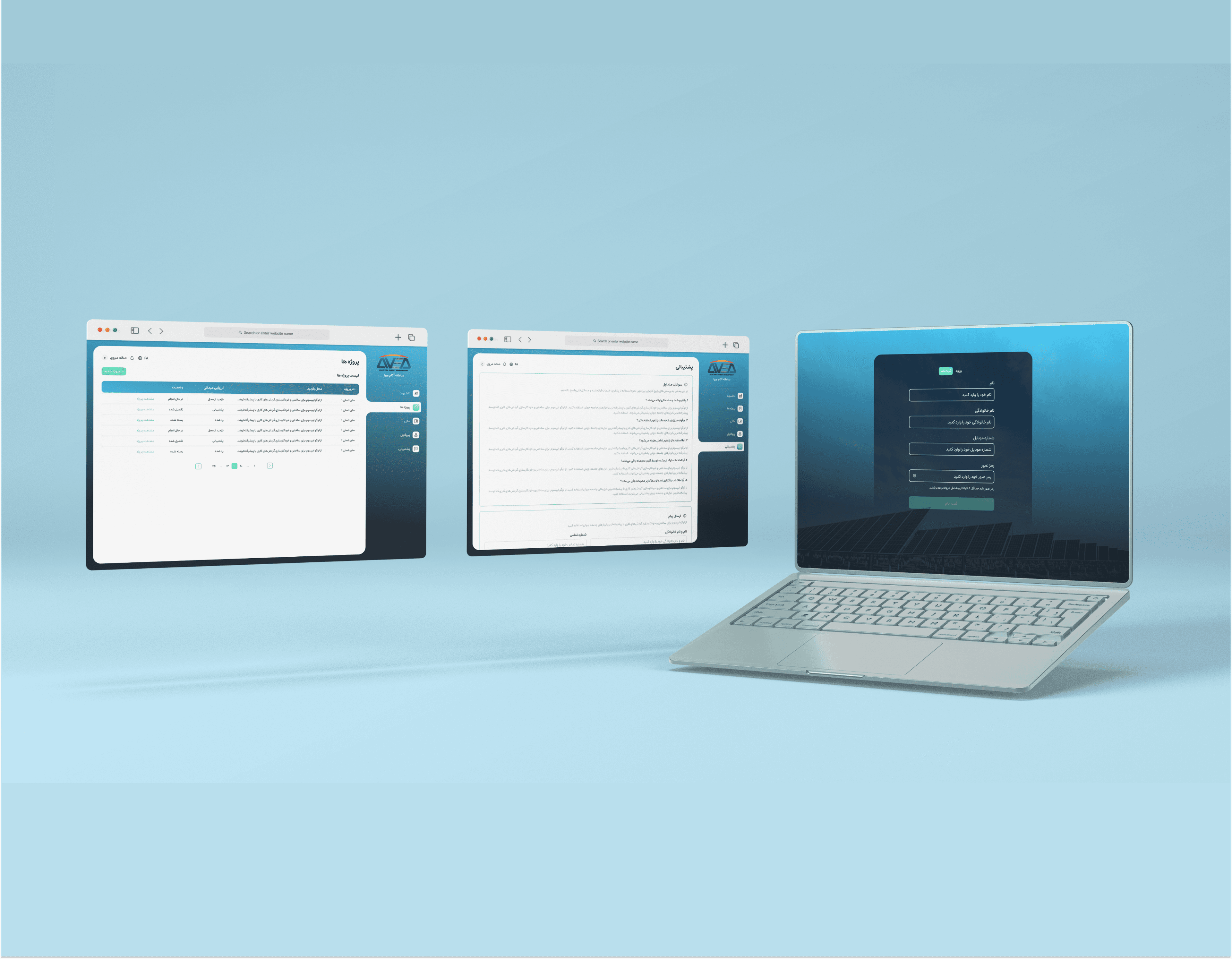
Data Labeling Platform
Multi-role web panel for data labeling operations
About the project
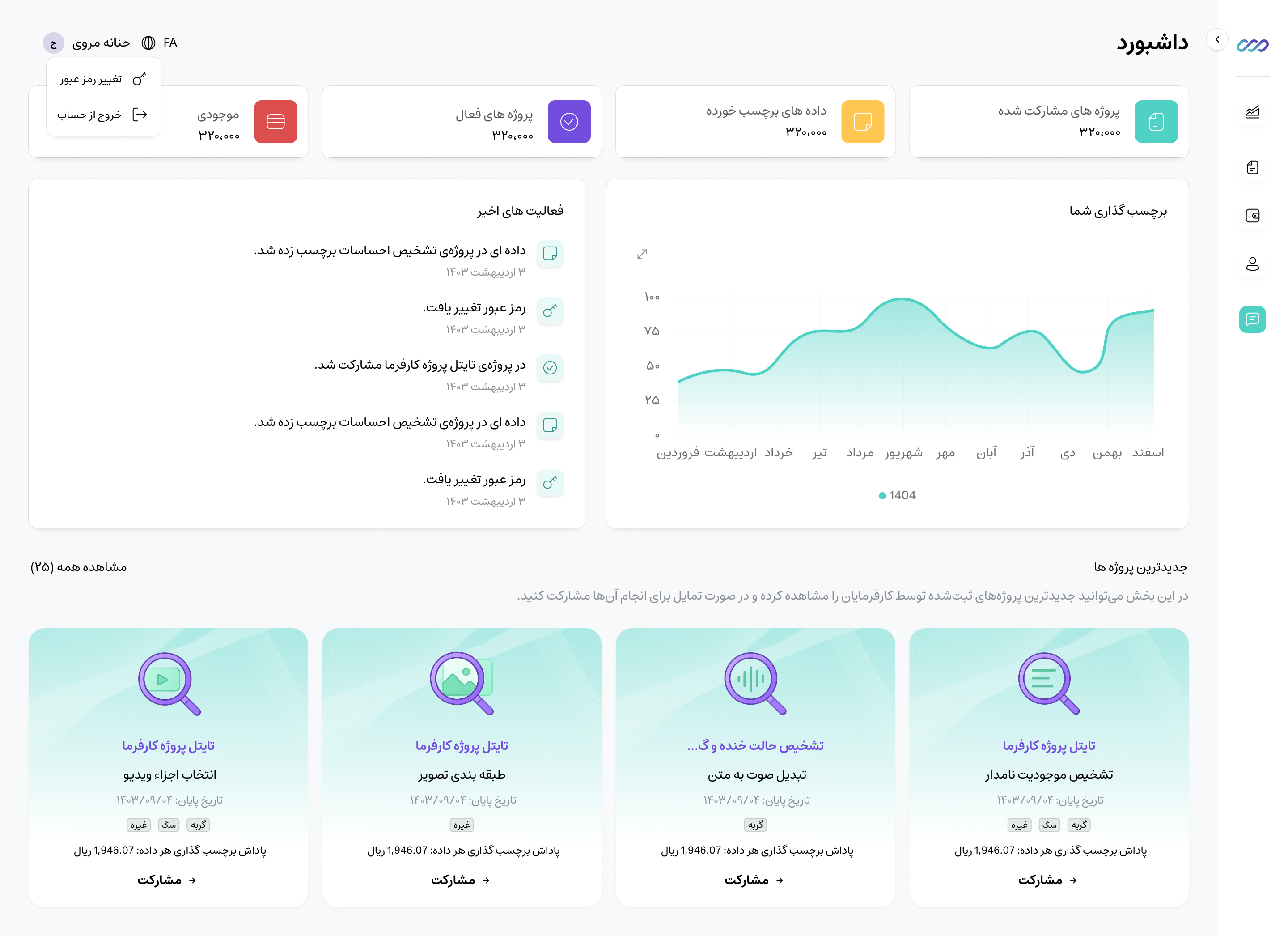
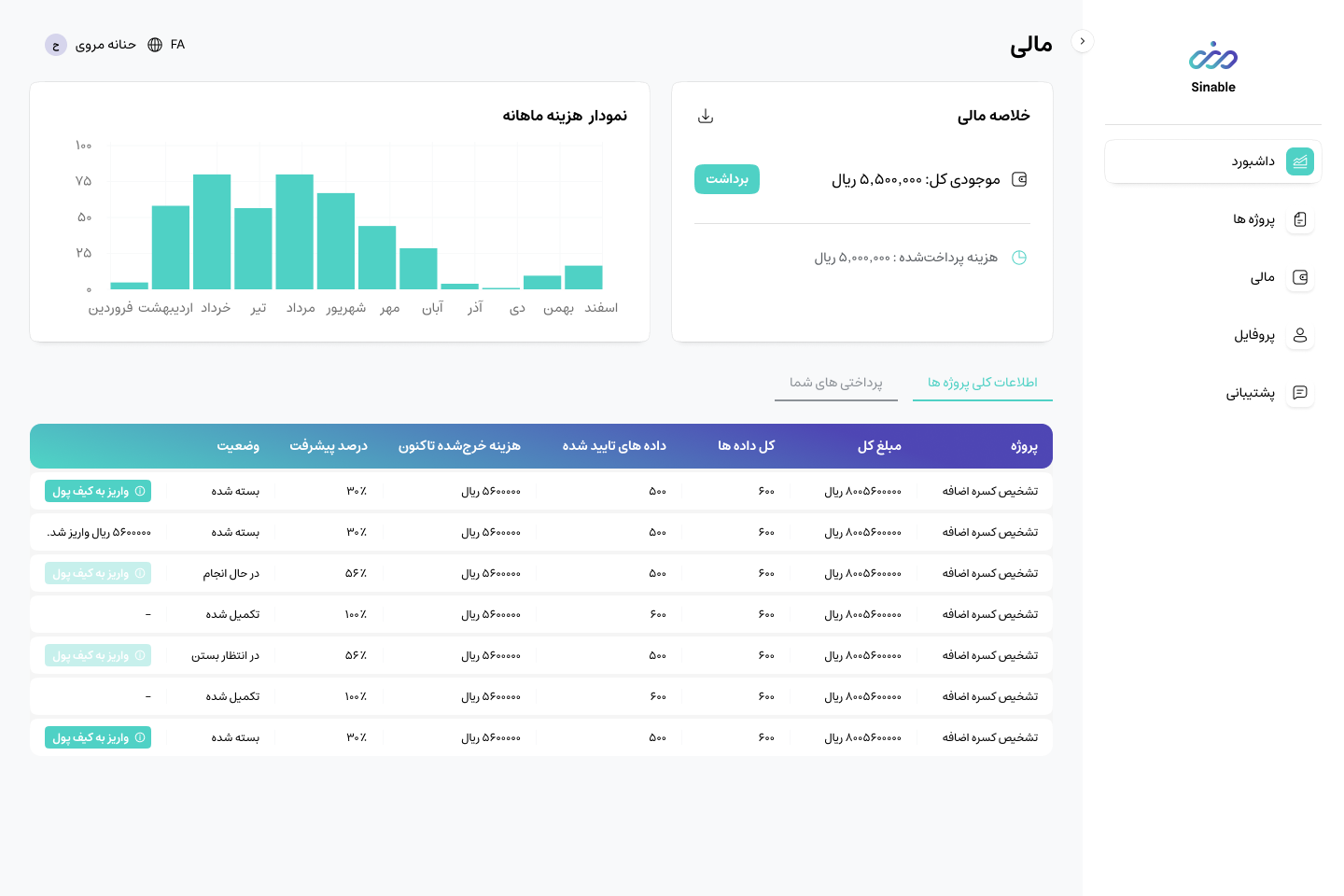
Streamlined design process with a multi-role panel and distinct workflows. Improved engagement with optimized dashboards and financial modules. Boosted efficiency by using the Moon Design System and benchmarking platforms. Enhanced UX through role-specific screens and UX flows. Increased usability by conducting testing and fixing issues.
Client:
Hooshmand Tadbir Diaco
National Data Labeling Platform
Overview
The National Data Labeling Platform (NDLP) is a web-based solution developed to streamline and localize the process of data annotation for AI-driven organizations in Iran. The platform serves companies and research groups that require high-quality, scalable labeled datasets across formats such as text, image, and audio. NDLP introduces a structured, multi-role workflow to ensure quality control, project traceability, and operational efficiency. A custom Design System was used throughout the project to ensure UI/UX consistency and support rapid iteration across all platform components.
The Problem
AI and data-centric companies in Iran face several challenges:
-
Lack of access to high-quality labeled data in Persian
-
No centralized, standardized infrastructure for large-scale annotation
-
Inability to enforce quality assurance in crowdsourced labeling
-
Operational overhead in managing diverse roles, tasks, and timelines
The Solution
NDLP is built around a clear role-based structure, workflow automation, and status tracking that enables scalable, trustworthy data labeling.
Key Roles
Employer
Submits projects and data, defines goals, and receives the final results.
Annotator (User)
Completes labeling tasks assigned by the platform.
Reviewer (Judge)
Validates the accuracy of labeled data and either approves or rejects annotations.
Admin
Oversees project approvals, assigns reviewers, confirms project budgets, and manages workflow integrity.

Core Flows
Project Submission
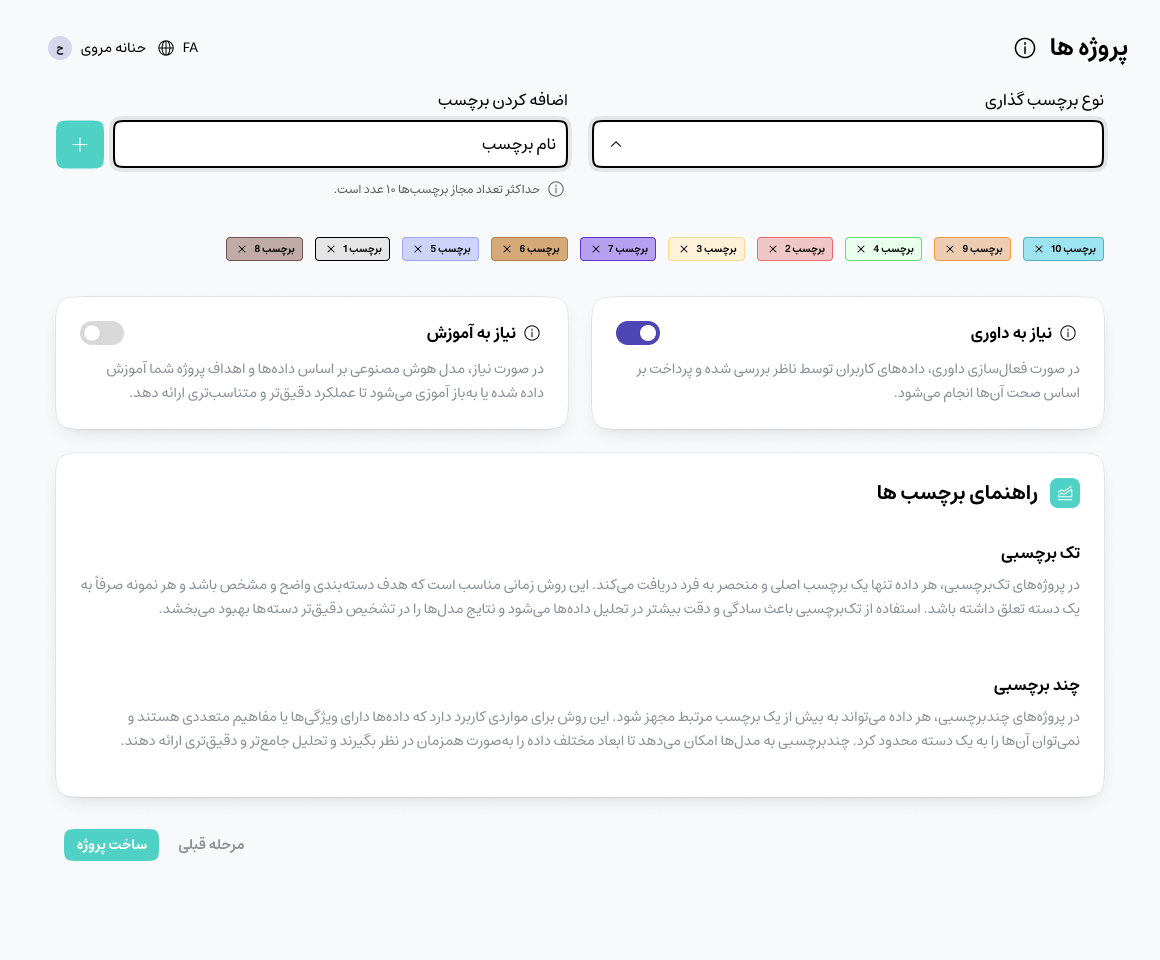
Employers submit a new project. The admin must review and approve or reject it. Cost input fields become available only after approval.
Reviewer Assignment
Admins assign a reviewer. If the reviewer is deactivated (e.g., due to inactivity), the project returns to a pending state. Admins can then assign a new reviewer and optionally add a reason for the change.
Cost Registration
Cost input is locked until admin approval. The system prevents entering a value below the employer’s proposed budget and ensures system-related fees are considered.
Project Closure
Employers can request to close a project. The project enters a “closing” status for final review, and once confirmed, it is officially marked closed.
Notifications (by Role)
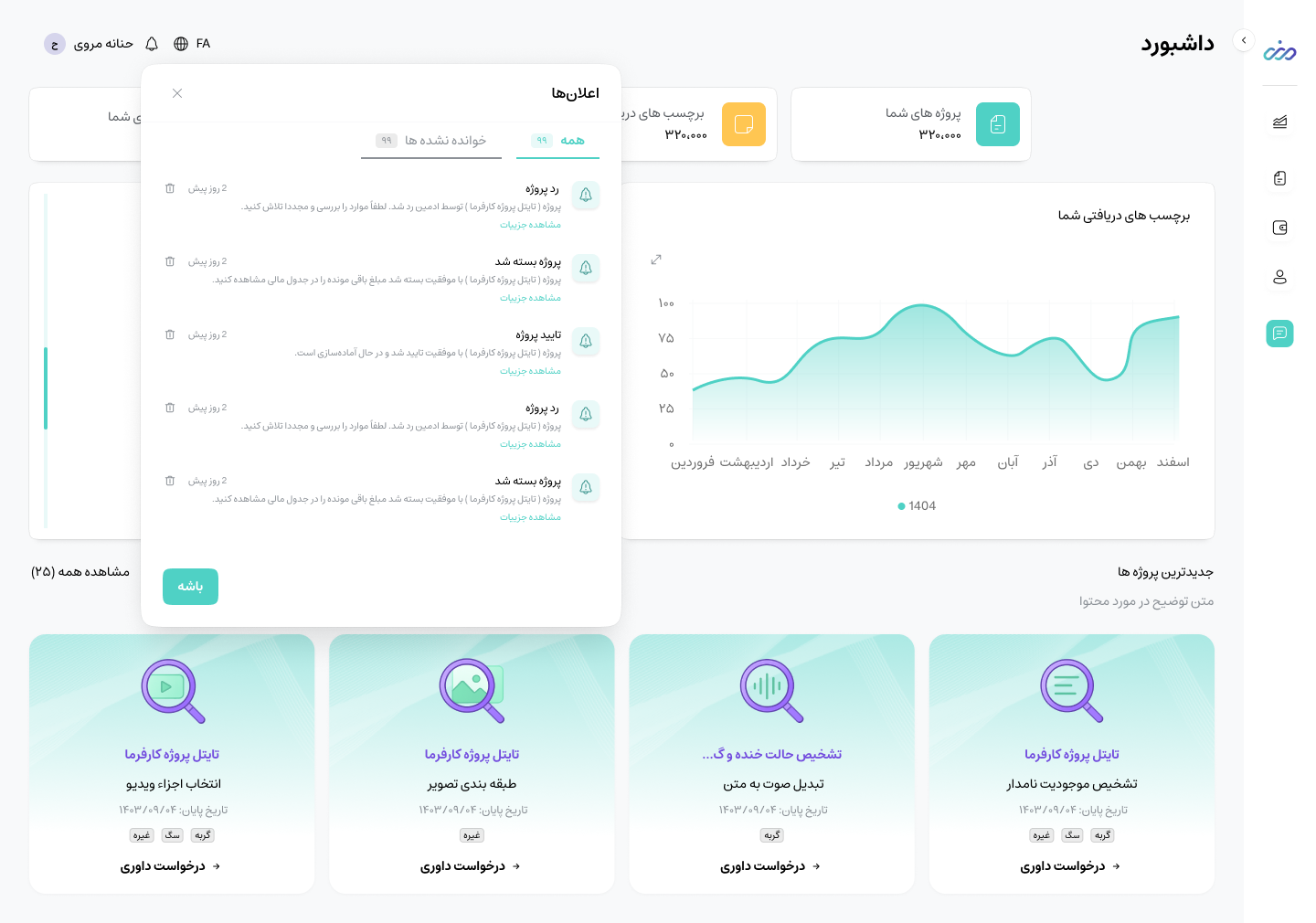
Admin
-
New project awaiting approval
-
Reviewer registration pending
-
Project requires cost confirmation
Employer
-
Project approved or rejected (with reason)
-
Reviewer assigned
-
Project closed
Reviewer
-
Assigned to a new project
-
Removed from a project with reason (e.g., due to delay)
-
Annotation accuracy score received
Project Status Management
Project statuses are tailored to each role's context:
System Status: awaiting_approval
-
Employer: Waiting for approval
-
Reviewer: —
-
Admin: Needs review
System Status: active_with_reviewer
-
Employer: In progress
-
Reviewer: Ready to review
-
Admin: Reviewer assigned
System Status: reviewer_removed
-
Employer: Awaiting new reviewer
-
Reviewer: Access removed
-
Admin: Needs reassignment
This contextual mapping avoids confusion and ensures each role sees only what’s relevant to them.
UX and Design Considerations
The entire product is built on a modular Design System developed in-house, featuring:
-
Consistent component styles
-
RTL language support (Persian)
-
Scalable color, spacing, and typography tokens
-
Uniform interactions across roles and screens
UX design focuses on:
-
Modal-based confirmations for all critical actions
-
Role-specific guidance and permissions
-
Badge counters and color-coded statuses
-
Visibility control based on project stage
Results
-
Improved annotation quality through multi-step review
-
Reduced admin workload through automated workflows
-
Greater trust and transparency between platform roles
-
A scalable infrastructure supporting high-volume, localized data labeling for AI development.